
"Suraj hua maddham
Chaand jalne laga
Aasman yeh kasin
Pehle kab tha yahan"
~ Suraj Hua Maddham: - Sandesh Shandilya, Alka Yagnik, Sonu Nigam
~Wedding Morning~

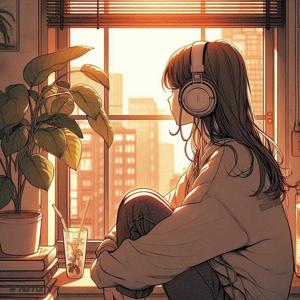
The morning of the wedding arrived like every important morning does: without fanfare, the light coming through the window at the same angle it always did, the city sounding the same way it always sounded.
And then Aadya knocked on my door at seven and said, "GET UP. IT'S TODAY," and the morning stopped being ordinary.
The room filled up quickly.
Aadya arrived first with coffee and a list of tasks. Ziva arrived two minutes later with opinions about everything. Aashika came with her camera and immediately began documenting. Ritika arrived with a schedule printed on actual paper, which she had laminated, which I chose not to comment on.
Devika aunty arrived at eight, quiet and warm, and simply sat in the corner and watched for a while with the expression of a woman in the middle of something she had been looking forward to for a long time.
And Bua.
Bua arrived last. She knocked and came in and looked at me sitting in the middle of the chaos and smiled with her whole face.
"Okay," she said. "Everyone out. I'm doing her hair first. You can all come back in twenty minutes."
Somehow this worked. Everyone filed out.
Bua sat me down at the window where the light was good.
~
Her hands in my hair were the hands I had known for three years.
The hands that had been there at the airport when I arrived. That had made tea when I couldn't sleep. That had handed me a tissue in Dr. Patel's waiting room. That had held mine on the night I finally told her about what happened in India, three months after I arrived, when I could finally find the words.
She worked slowly, without hurrying.
"Your dadi had hair like this," she said, half to herself. "Long and thick and absolutely impossible to manage."
"I know. She used to make me sit still for an hour."
"You never sat still for a full hour in your life."
"I sat still for her."
Bua smiled. I could see it in the mirror.
She worked for a while in comfortable silence.
Then Dadi appeared in the doorway.
She came in without announcing herself, the way she did everything—with the confidence of someone who had never needed to wait for invitation. She stood behind me and looked at my face in the mirror for a moment.
Then she reached into the fold of her own saree and produced something.
A necklace.
Gold, old, with a central pendant of deep red stone set in a pattern I recognized from the portrait in the corridor—the woman in the 1887 painting had been wearing something from this set.
"This was my mother's," Dadi said. "And her mother's before that. It has been worn at every wedding in this family for five generations."
She placed it around my neck.
In the mirror, it sat against my collarbone like it had been made for me.
I couldn't speak.
"Welcome," Dadi said simply. And touched my shoulder once, and left.
Bua met my eyes in the mirror.
"Breathe," she said.
I breathed.
~
The outfit was the last thing.
Aadya and Ziva helped me into it—the dusty rose lehenga, the phulkari dupatta, the gold at the border catching the light exactly as I'd imagined when I designed it. Bua stood at the back, watching.
When it was on, everyone went quiet.
Ziva made a sound that was not words.
Aashika—who had been photographing everything with professional composure—lowered her camera for a moment.
"Kashvi," Aadya said. Her voice was careful. "You made this."
"Yes."
"You designed and built the thing you're wearing to your own wedding."
"Yes."
"That is the most you thing that has ever happened."
I looked in the mirror.
Punjabi silhouette. Rajasthani colour and textile. Old embroidery, new drape. The small hidden motif over the heart that no one could see but me.
This is who I am.
All of it, simultaneously.
Bua moved to stand beside me in the mirror.
She reached into the dupatta and found the inner fold. Pinned something small there—something I couldn't see but felt, a slight weight, a piece of metal.
"My mother's brooch," she said quietly. "I've carried it in every important moment of my life. Now it goes with you."
I took her hand.
We didn't say anything.
We didn't have to.
~

The groom's getting-ready situation was, in the kindest terms, chaotic.
Ivaan had been assigned the role of 'helpful' and was instead providing a running commentary on everything that was happening, most of which was unhelpful and some of which was actively counterproductive.
Vihaan had pressed his sherwani and then left it on the ironing board and then answered a phone call and then the iron had been left on and the result was a very small but visible scorch mark on the left sleeve that Vihaan was now dealing with using methods that included, at various points, a damp cloth, cold water, the faint hope that no one would notice, and prayer.
"Can you feel it from there? Is it hot? Does it smell burnt—"
"Vihaan," Shivansh said. "Stop touching it."
"But if I—"
"Stop touching it."
"Can you see it from—"
"I can see it from exactly where I'm standing and touching it more will not help."
Rishvik observed all of this from the chair in the corner with the detached scientific interest of someone studying a new species.
Aadya walked in at 9am, looked at the room, walked back out, and returned three minutes later with a sewing kit, a different sherwani that had been retrieved from somewhere, and the specific expression of a person who had known this would happen and was prepared.
"Everyone who is not useful, leave," she said.
Ivaan left.
Rishvik left.
Vihaan stayed, having been designated a project.
Shivansh stayed on the grounds of being functional.
I stayed because it was my wedding and I was allowed.
Aadya fixed the sherwani in twelve minutes. Handed it back to Vihaan without a word.
"You are extraordinary," Vihaan said.
"I know. Now dress yourself and don't touch anything hot."
~
At ten-thirty, when I was dressed and everyone had been organized into something resembling order, the door opened.
Dadu.
He looked at the room once. Everyone else somehow understood, the way they always did with him, that this was a moment for exit. Aadya shepherded people out with quick efficiency.
And then it was just Dadu and me.
He stood in the centre of the room and looked at me.
I waited.
He was quiet for a long moment. Long enough that I thought perhaps words weren't coming—that this was one of his statement silences, the ones that communicated more than speech.
Then he said: "Your grandfather—my father—told me something the morning of my wedding. I have been deciding for three days whether to pass it on."
"And?"
"He said: the crown is something you wear. A marriage is something you build. Do not confuse which of the two is the more permanent thing."
He looked at me.
"I am passing it on," he said. "Because I believe you already know it. But some things are worth saying aloud."
He walked to the door.
"Dadu," I said.
He turned.
"Thank you."
He nodded. The real one—the nod that carried everything.
And left me to the last minutes before the rest of my life.
~
LIKE AND COMMENT...


Write a comment ...